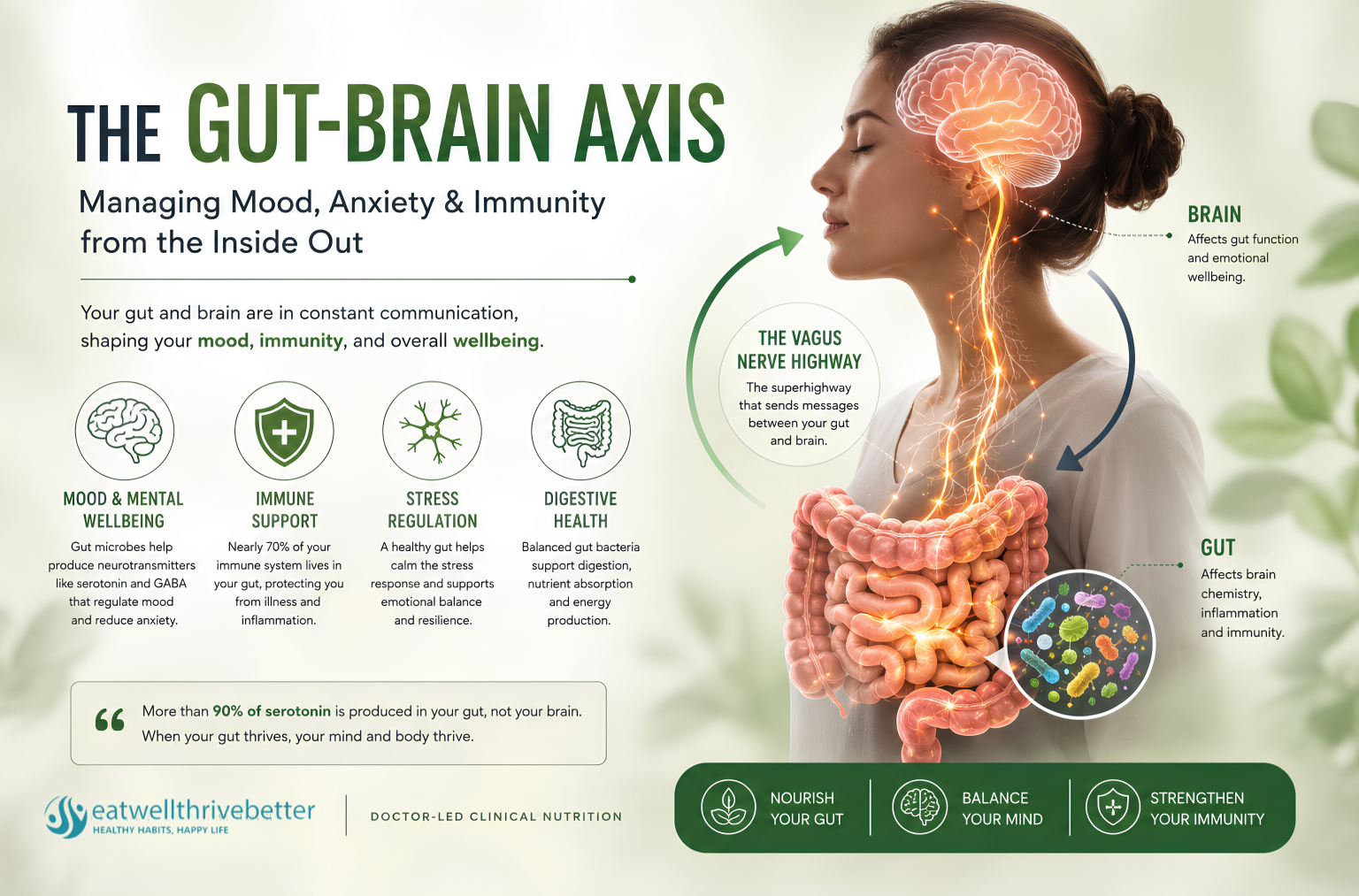
The Gut-Brain Axis:
Managing Mood, Anxiety & Immunity From the Inside Out
Most people assume that mood, anxiety, focus, and mental wellbeing are controlled entirely by the brain. Surprisingly, modern science tells a very different story.
More than 90% of the body’s serotonin — often referred to as the “feel-good” neurotransmitter — is produced within the digestive system, not the brain.
This powerful connection between the gut and the brain is known as the Gut-Brain Axis. When your gut microbiome is thriving, it can support better mood, stronger immunity, improved mental clarity, and greater resilience to stress. When it becomes imbalanced, the effects can be felt throughout the entire body.
Why the Gut Is Called the “Second Brain”
Hidden within the digestive tract is a vast network of nerves known as the Enteric Nervous System (ENS). This network contains hundreds of millions of neurons and operates independently while remaining in constant communication with the brain.
This is why emotions can affect digestion, and digestive problems can influence mood, focus, and emotional wellbeing.
Clinical Insight:
Many individuals struggling with fatigue, brain fog, anxiety, or poor concentration often focus solely on the brain while overlooking a major contributor — gut health.
The Vagus Nerve: Your Internal Communication Highway
The primary communication channel between the gut and brain is the vagus nerve.
Think of it as a high-speed information highway that constantly sends messages in both directions.
- Stress signals from the brain can alter digestion.
- Gut inflammation can influence mood and cognition.
- Digestive discomfort can increase feelings of anxiety.
- A healthy gut can promote calmness and emotional balance.
This two-way relationship explains why chronic stress often triggers digestive symptoms and why digestive disorders frequently coexist with mood disturbances.
Your Gut Microbiome Helps Create Mood-Regulating Chemicals
Trillions of beneficial microorganisms live inside the digestive system. Collectively known as the gut microbiome, these microbes perform far more than digestive functions.
Serotonin Production
Serotonin influences happiness, emotional stability, appetite regulation, and sleep quality. A healthy digestive system supports the body’s ability to produce and regulate serotonin efficiently.
GABA: The Calming Neurotransmitter
Certain beneficial bacteria support the production of GABA (Gamma-Aminobutyric Acid), a neurotransmitter responsible for relaxation and stress management.
Dopamine & Motivation
Gut microbes also influence pathways involved in dopamine production, which affects motivation, reward, focus, and drive.
Clinical Insight:
Supporting gut health isn’t only about digestion. It may positively influence stress resilience, mental clarity, sleep quality, and emotional wellbeing.
The Inflammatory Loop: How Gut Problems Affect the Brain
The intestinal lining acts as a protective barrier between the digestive system and the bloodstream.
When this barrier becomes compromised, inflammatory compounds may enter circulation and trigger widespread immune activation.
This inflammation doesn’t stay confined to the digestive system. It can influence:
- Brain fog and reduced concentration
- Persistent fatigue
- Mood instability
- Poor stress tolerance
- Reduced cognitive performance
In many cases, chronic inflammation quietly contributes to symptoms that people mistakenly attribute solely to stress or aging.
Gut Health and Immunity: An Overlooked Relationship
Approximately 70% of the body’s immune system is associated with the digestive tract.
A balanced microbiome helps regulate immune responses, support healthy inflammation levels, and improve resilience against illness.
This is one reason why individuals with poor digestive health may also experience frequent infections, slow recovery, or chronic inflammatory symptoms.
Signs Your Gut-Brain Axis May Need Support
- Frequent bloating or digestive discomfort
- Brain fog or poor concentration
- Low energy despite adequate sleep
- Increased anxiety or stress sensitivity
- Sugar cravings
- Mood fluctuations
- Difficulty sleeping
- Frequent illnesses
While these symptoms can have multiple causes, they often indicate that the gut-brain connection deserves attention.
Beyond Generic Probiotics: A Doctor-Led Approach to Gut Restoration
Many people attempt to improve gut health through over-the-counter probiotics. While supplements may have a role in certain situations, they rarely address the root cause of imbalance.
Effective gut restoration requires understanding:
- Dietary patterns
- Stress levels
- Sleep quality
- Medical history
- Hormonal health
- Lifestyle factors
At Eat Well Thrive Better, our doctor-led approach focuses on identifying underlying contributors and creating a personalized plan that supports digestive health, metabolic health, and overall wellbeing.
Clinical Perspective:
True gut healing isn’t about finding the “best probiotic.” It’s about understanding why the imbalance developed in the first place and creating a sustainable plan to restore balance.
Your Journey to Better Health May Start in the Gut
The Gut-Brain Axis reminds us that health is deeply interconnected.
Your digestion affects your mood. Your stress influences your gut. Your microbiome impacts your immunity. When these systems work together, the result is better energy, stronger resilience, improved mental clarity, and greater overall wellbeing.
Sometimes the path to feeling better doesn’t begin in your head — it begins in your gut.
Take the First Step Toward Better Gut & Brain Health
If you’re experiencing digestive concerns, fatigue, brain fog, stress-related eating, or recurring health challenges, a personalized doctor-led approach can help uncover the root cause.
Book a Complimentary Wellness Discovery ConsultationGut-Brain Axis FAQs
Can poor gut health affect mental health?
Research suggests that gut health influences neurotransmitter production, inflammation, and stress regulation, all of which may impact mood and emotional wellbeing.
Why is the gut called the second brain?
The digestive system contains an extensive network of neurons known as the Enteric Nervous System, which communicates continuously with the brain.
Can gut health affect immunity?
Yes. A large portion of the immune system is associated with the digestive tract, making gut health an important factor in immune function.
Are probiotics enough to restore gut health?
Not always. Diet, stress, sleep, lifestyle habits, and underlying health conditions all influence gut health and should be considered.