The Hidden Hunger:
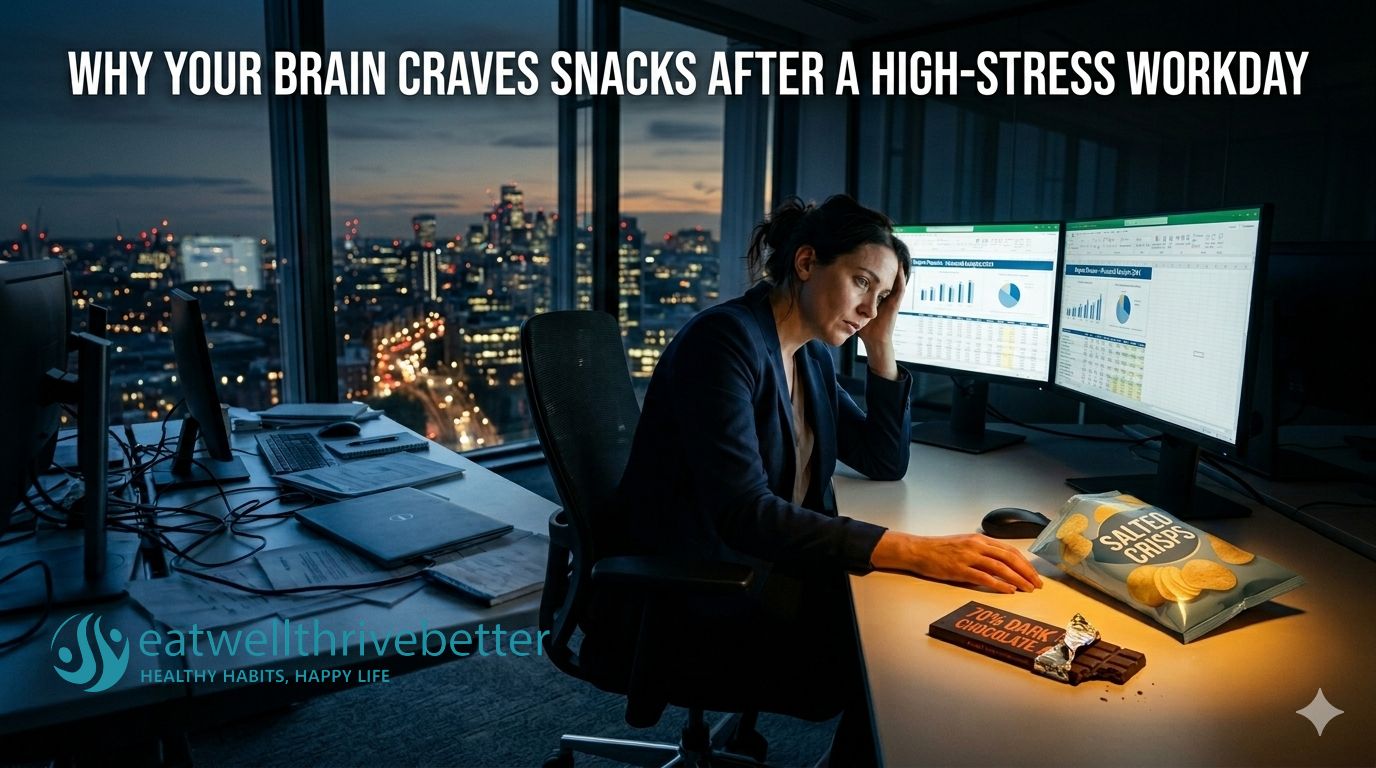
Why Your Brain Craves Snacks After a High-Stress Workday
You finish a long, productive workday. Meetings are done, emails cleared, responsibilities handled. But the moment you sit down to relax, something shifts.
Suddenly, you’re craving something salty, crunchy, or sweet — even if you had a proper dinner just an hour ago.
This isn’t lack of discipline. It’s what we call hidden hunger — a biological response driven by stress, hormones, and brain chemistry.
The Science Behind Stress-Driven Snacking
Cortisol & Hunger Hormones
During high-stress workdays, cortisol levels remain elevated. This disrupts hunger-regulating hormones — increasing ghrelin (hunger) and reducing leptin (fullness).
The Dopamine Deficit
Stress drains your brain’s reward system. To compensate, your brain seeks quick dopamine — and ultra-processed foods provide the fastest hit.
Clinical Insight:
Evening cravings are rarely about food.
They are a combination of hormonal imbalance,
mental fatigue, and unmet neurological needs.
Why Willpower Is Not the Solution
Trying to “control” stress eating through discipline alone often leads to frustration.
You cannot out-willpower a hormonal imbalance. The more you restrict, the stronger the rebound craving becomes.
Sustainable change comes from regulating your physiology — not fighting it.
Science-Backed Ways to Reduce Stress Snacking
The Transition Meal
A small protein-rich snack before leaving work can stabilize blood sugar and reduce evening cravings.
Sensory Swaps
Cravings are often sensory. Replace chips with crunchy options like makhana or nuts, or use temperature-based resets like herbal tea.
The 10-Minute Reset
A short breathing or posture reset can lower cortisol, helping your body transition out of stress mode.
- Deep breathing (4-4-6 pattern)
- Short walk or light stretching
- Disconnect from screens briefly
Understanding Hunger Changes Everything
When you understand the “why” behind your cravings, you stop blaming yourself — and start supporting your body correctly.
Managing stress-driven eating is not about eliminating food, but about improving your body’s response to stress.
Balance Your Health with Your Work Life
If you’re managing a high-pressure routine, your nutrition strategy needs to support it — not fight it.
Book a Complimentary Wellness Discovery ConsultationStress Eating FAQs
Why do I crave snacks after work?
Stress increases cortisol and hunger hormones, leading to cravings.
Is stress eating a lack of discipline?
No. It is a biological response, not a willpower issue.
Can stress cause weight gain?
Yes. Chronic stress affects hormones and promotes fat storage.
How can I reduce late-night snacking?
Stabilizing blood sugar and reducing stress triggers can help.