Is It Just Fatigue?
5 Signs Your “Healthy” Breakfast Is Spiking Your Insulin
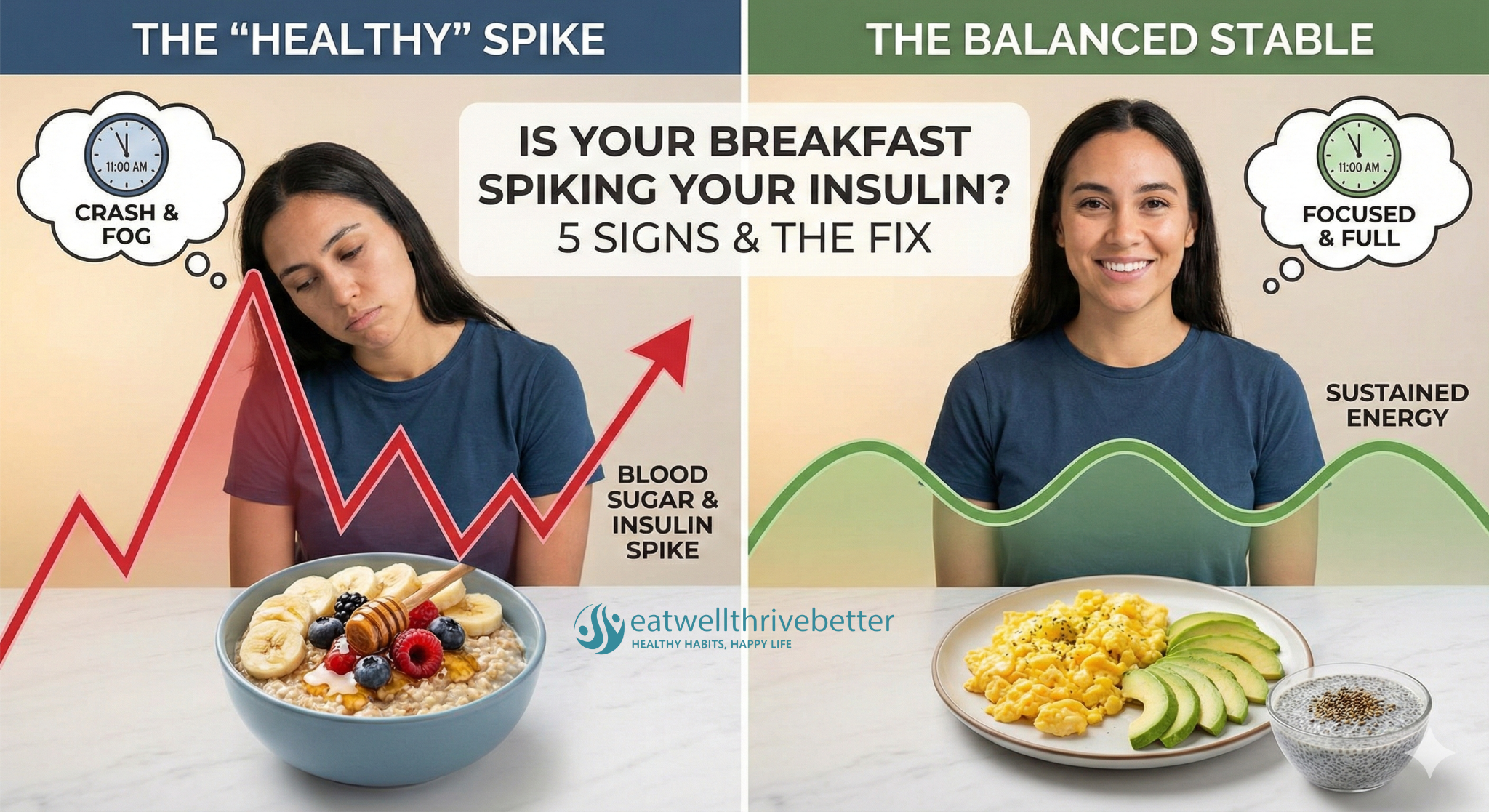
You wake up determined to “eat clean.” Oats, fruit, maybe a smoothie — everything looks healthy.
Yet by mid-morning, you feel exhausted, hungry again, foggy-headed, and craving sugar.
Many people blame this on stress or poor sleep. But often, the real culprit is hiding in plain sight: an insulin-spiking breakfast disguised as a healthy choice.
Why Breakfast Can Make or Break Your Metabolism
Breakfast sets the hormonal tone for the entire day. When it causes a sharp insulin spike, blood sugar rises rapidly — and then crashes.
This cycle is especially damaging for people with insulin resistance, PCOS, thyroid imbalance, or unexplained fatigue.
5 Warning Signs Your “Healthy” Breakfast Is Backfiring
1. You Feel Hungry Again Within 1–2 Hours
True hunger this soon after eating usually signals a blood sugar crash. High-carb, low-protein breakfasts digest quickly and fail to sustain energy.
2. Mid-Morning Fatigue or Brain Fog
If your energy dips sharply mid-morning, insulin fluctuations may be impairing glucose delivery to the brain.
3. Strong Sugar or Tea/Coffee Cravings
Cravings shortly after breakfast are a biological response — your body is asking for quick glucose to correct the crash.
4. Mood Irritability or Anxiety
Blood sugar instability affects cortisol and adrenaline. This can feel like unexplained anxiety, irritability, or emotional sensitivity.
5. Weight Gain Despite “Clean Eating”
Chronically elevated insulin promotes fat storage, particularly around the abdomen — even when calories seem reasonable.
Clinical insight:
Insulin spikes don’t require junk food.
Even “healthy” breakfasts can disrupt hormones
if they lack protein, fiber, and fat balance.
Common “Healthy” Breakfasts That Spike Insulin
- Plain oats with fruit but no protein
- Smoothies made only with fruits and dates
- Toast with honey or jam
- Fruit juices or vegetable juices
- Breakfast cereals marketed as “whole grain”
These foods aren’t “bad” — they’re simply incomplete without protein, fiber variety, and fats.
What a Metabolically Stable Breakfast Looks Like
A hormone-friendly breakfast focuses on:
- Protein (to blunt insulin spikes)
- Fiber (to slow glucose absorption)
- Healthy fats (to sustain energy)
This combination keeps blood sugar stable, supports mental clarity, and reduces cravings throughout the day.
Why Generic Diet Advice Often Fails
Insulin response is highly individual. What works for one person may trigger symptoms in another — especially in PCOS, thyroid disorders, or metabolic resistance.
At Eat Well Thrive Better, we design breakfasts based on your hormones, lifestyle, digestion, and medical background — not generic rules.
Fatigue Isn’t Normal — It’s Informative
If you feel tired, hungry, or foggy after a “healthy” breakfast, your body is communicating something important.
Addressing insulin stability often resolves fatigue, cravings, and stubborn weight issues — without extreme dieting.
Breakfast & Insulin FAQs
Can healthy food still spike insulin?
Yes. Carb-heavy meals without protein or fat can spike insulin.
Is fatigue after breakfast normal?
No. It often signals blood sugar instability.
Are oats bad for insulin resistance?
Not inherently — but they require proper pairing and portions.
Does this affect PCOS?
Yes. Insulin spikes worsen PCOS symptoms.