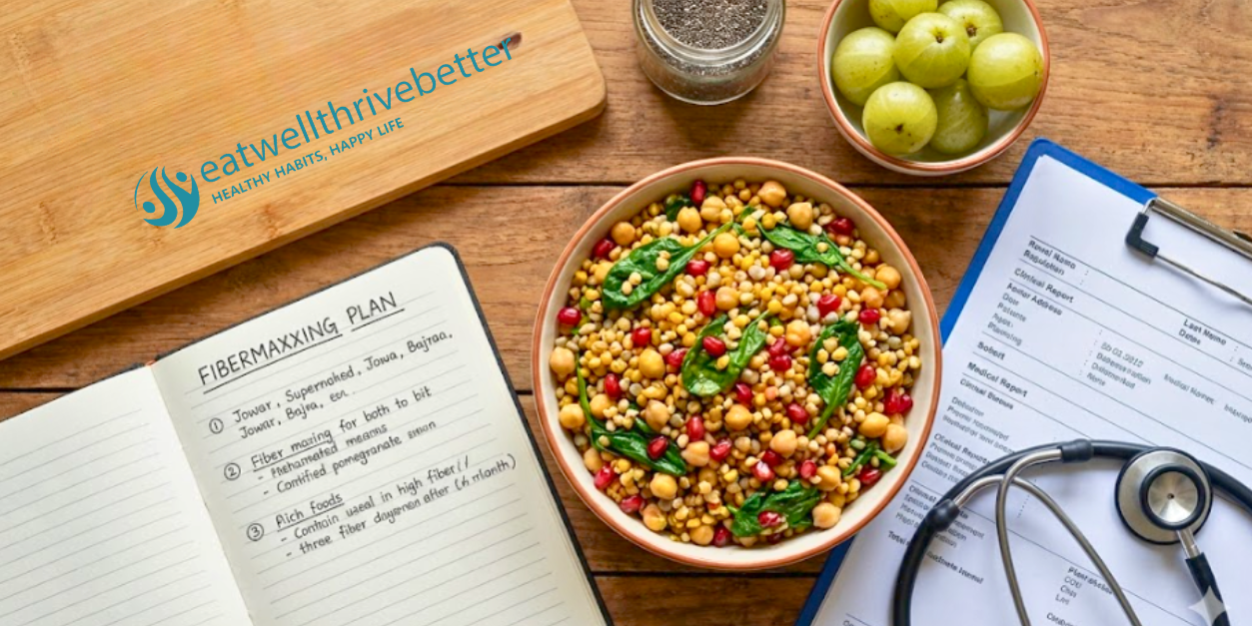
The 2026 Guide to ‘Fibermaxxing’ for PCOS & Insulin Resistance
In 2026, the wellness world has finally moved beyond the protein-only obsession and extreme low-carb narratives. The new gold standard for metabolic health is here — Fibermaxxing.
For individuals living with PCOS and Insulin Resistance, this isn’t just another trend. It is a clinical necessity.
While AI-driven nutrition apps continue to flood the market with generic low-carb templates, they often fail to understand the hormonal, inflammatory, and cultural realities that demand a doctor-led, human approach.
At Eat Well Thrive Better, we believe true healing happens in the kitchen and the clinic — not inside an algorithm.
The Science: Why Fiber Is the Ultimate Insulin Stabilizer
Insulin resistance develops when the body’s cells stop responding efficiently to insulin, leading to elevated blood glucose levels and hormonal disruption.
Dietary fiber — especially soluble fiber — acts as a biological brake. It slows digestion and glucose absorption, preventing sharp blood sugar spikes and excessive insulin release.
Simply put: higher fiber intake leads to a slower, more stable rise in blood glucose — the exact metabolic environment required for PCOS management.
Why 35g Is the New Clinical Benchmark
Most generic diets recommend 20–25g of fiber per day. For women with PCOS and insulin resistance, this is often insufficient.
Clinical experience and emerging research now support a target of 35g or more per day — a strategy we call Fibermaxxing.
- Improves insulin sensitivity
- Reduces systemic inflammation
- Supports healthy gut microbiota
- Helps excrete excess androgens linked to acne and hair fall
Human Expertise vs AI Diet Apps: The Generic Trap
It’s tempting to ask an AI bot for a “PCOS diet plan.” But this is where Silicon Valley nutrition fails real-life bodies.
| Feature | AI Diet Apps | Eat Well Thrive Better |
|---|---|---|
| PCOS Specificity | Generic templates | Doctor-led, case-by-case analysis |
| Food Context | Imported, impractical foods | Local, seasonal, Indian foods |
| Accountability | Bot reminders | Human follow-ups & clinical review |
| Nutrient Focus | Macros only | Fiber types, micronutrients & hormones |
| Trust | 3.5–4.2★ app ratings | 275+ verified 5★ Google reviews |
Your Fibermaxxing Toolkit: The Local Edition
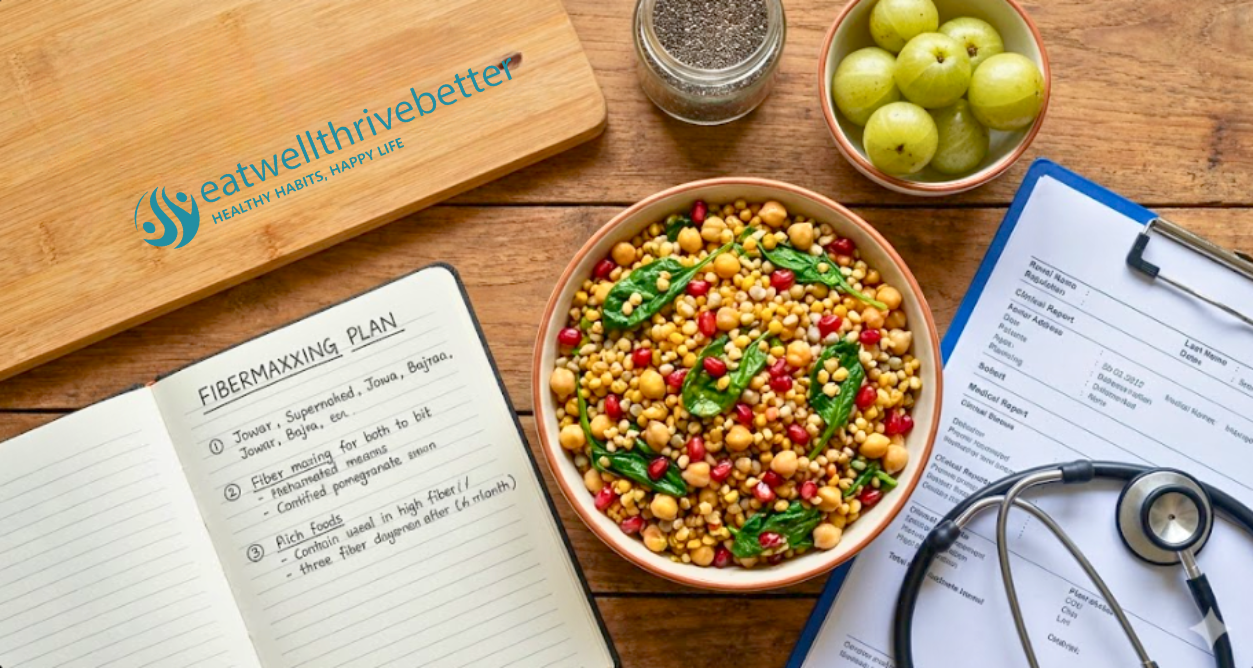
Fibermaxxing doesn’t require bio-hacked powders or imported superfoods. Some of the most powerful tools already exist in Indian kitchens.
Jowar & Bajra
Ancient grains that provide a dense fiber matrix far superior to refined wheat or AI-suggested gluten-free bread.
Amla (Indian Gooseberry)
Rich in fiber and Vitamin C, amla reduces oxidative stress common in PCOS.
Legumes with Skin
Chana and moong, when prepared correctly, stabilize insulin and support hormone balance.
Clinical insight:
PCOS is not a carb problem.
It is a fiber deficiency,
insulin sensitivity,
and lifestyle regulation problem.
Reclaim Your Metabolic Health
PCOS and insulin resistance are complex — but the solution begins with whole, fiber-rich foods guided by clinical expertise.
Don’t leave your hormonal health to an algorithm. Move beyond generic advice and start thriving with clarity, structure, and support.
Stop guessing. Start healing.
Fibermaxxing & PCOS FAQs
Is Fibermaxxing safe for PCOS?
Yes. When implemented correctly, it improves insulin sensitivity and gut health.
Can fiber alone fix PCOS?
Fiber is foundational, but lifestyle, sleep, stress, and medical context matter.
Are AI diet apps reliable for PCOS?
They lack clinical personalization and hormonal context.
How long does Fibermaxxing take to show results?
Most women notice metabolic and digestive improvement within 3–6 weeks.