Weight Loss Without Starvation
Science-Backed Methods That Actually Work
If you’ve ever tried to lose weight by skipping meals, eating very little, or constantly feeling hungry, you’re not alone.
Starvation-based dieting is one of the most common reasons people experience fatigue, hormonal imbalance, and long-term weight regain. Clinically, it works against the body — not with it.
Sustainable weight loss follows a very different approach. It focuses on metabolism, hormonal balance, and nourishment — not deprivation.
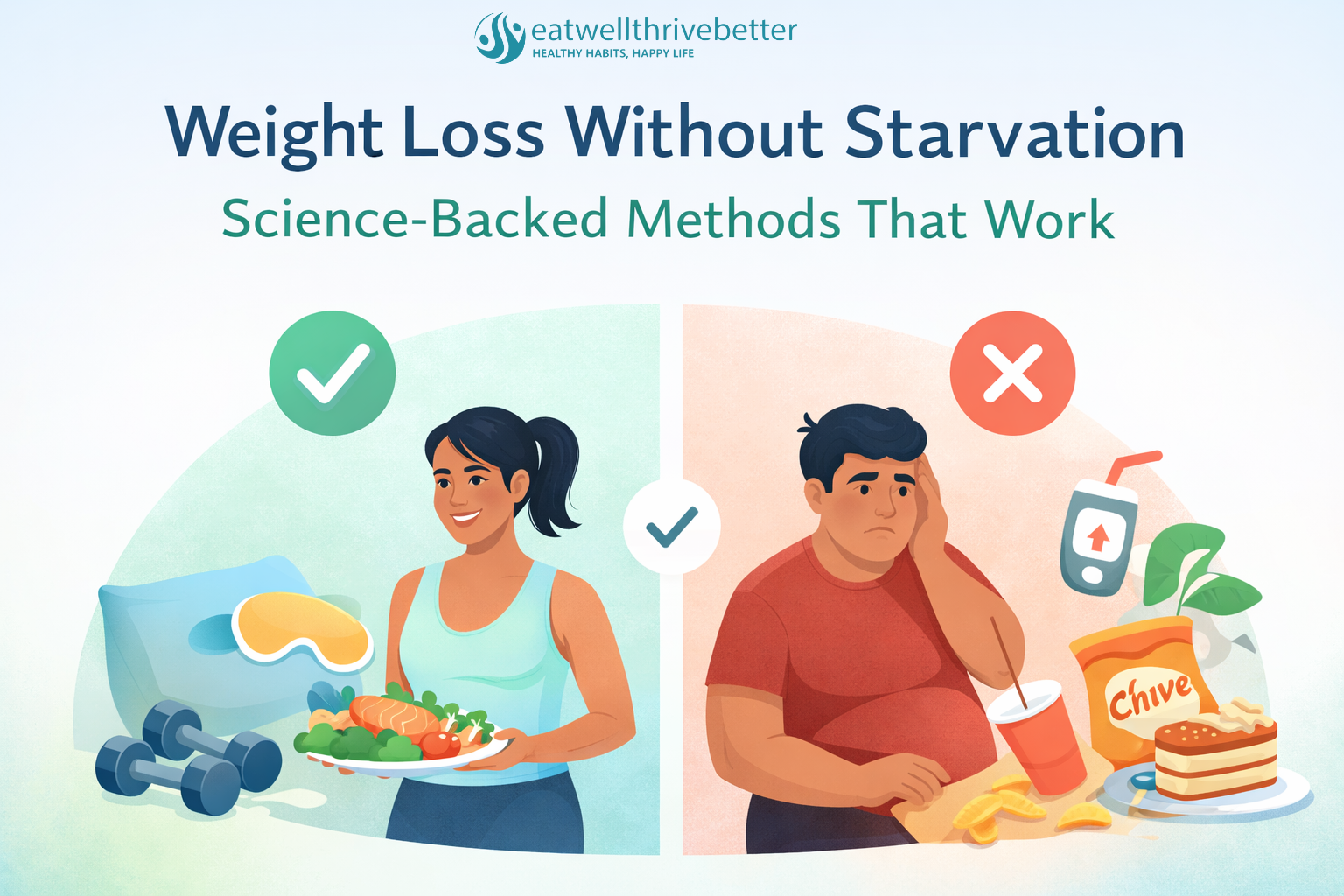
Why Starvation Diets Fail
When calorie intake drops too low, the body activates survival mechanisms. Metabolism slows down, hunger hormones increase, and muscle mass is often lost before fat.
- Lower resting metabolic rate
- Increased cortisol and stress hormones
- Loss of lean muscle mass
- Intense cravings and binge cycles
- High likelihood of weight regain
This is why crash diets may show quick initial results, followed by plateaus or rebound weight gain.
The Science Behind Sustainable Weight Loss
Research consistently shows that long-term fat loss improves when nutrition supports blood sugar balance, muscle preservation, and hormonal stability.
Clinical insight:
A nourished body burns fat more efficiently than a starved one.
Sustainable weight loss depends on metabolic and hormonal balance —
not extreme calorie restriction.
Science-Backed Methods That Actually Work
1. Eat Enough Protein
Protein preserves muscle mass, improves satiety, and prevents metabolic slowdown during weight loss.
2. Balance Blood Sugar
Stable blood sugar reduces hunger, cravings, and unnecessary fat storage.
3. Prioritize Strength Training
Muscle is metabolically active tissue. Preserving it is essential for long-term fat loss.
4. Focus on Sleep & Stress
Poor sleep and chronic stress raise cortisol levels, making weight loss significantly harder.
Why Personalization Matters
Age, gender, medical conditions, lifestyle, sleep patterns, and stress levels all influence how the body responds to nutrition.
A doctor-led, personalized approach ensures weight loss supports long-term metabolic and hormonal health — not just short-term scale changes.
Frequently Asked Questions
Can you lose weight without feeling hungry?
Yes. Balanced meals stabilize hunger hormones and reduce appetite naturally.
Why does starving slow down weight loss?
Starvation lowers metabolism and increases cortisol, leading to muscle loss.
Is calorie counting necessary?
No. Food quality, balance, and metabolic health matter more long-term.
Does personalized nutrition really work?
Yes. Personalization accounts for hormones, lifestyle, and medical needs.